Only 13% of dealerships respond to digital leads within 5 minutes, and even then, most of them still fail to convert those leads into buying customers.
Today’s automotive buyers expect quick responses. When dealerships take too long to respond, potential customers often move on to competitors who can address their questions faster. According to our research, only the top 10% of dealerships successfully respond to their leads within 60 seconds.
But… how do they do that?
The secret lies in advanced automotive technology. Integrating a centralized lead management system consolidates every lead into a unified CRM, while integrating a conversational AI agent and intelligent chatbot into their workflow will be the icing on the cake.
This is where OmnePulse excels as an AI-powered all-in-one automotive lead management solution. Let’s discuss everything in detail so you can easily understand how it benefits dealerships in capturing and responding to leads.
Key Takeaways
-
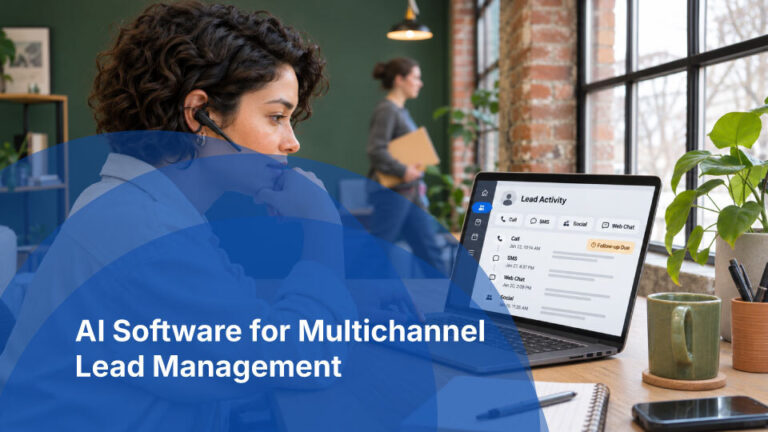
AI centralized lead management platform capture leads from different channels, including phone calls, text messages, web chats, and social media DMs, into a singular CRM.
-
It helps dealers to respond to their leads within 60 seconds while improving customers’ and buyers’ experience to increase your conversion rate’s possibilities.
-
It also keeps an eye on your prospects to create a strategic follow-up to convert leads before they gone cold.
What is a Centralized Lead Management System for Automotive?
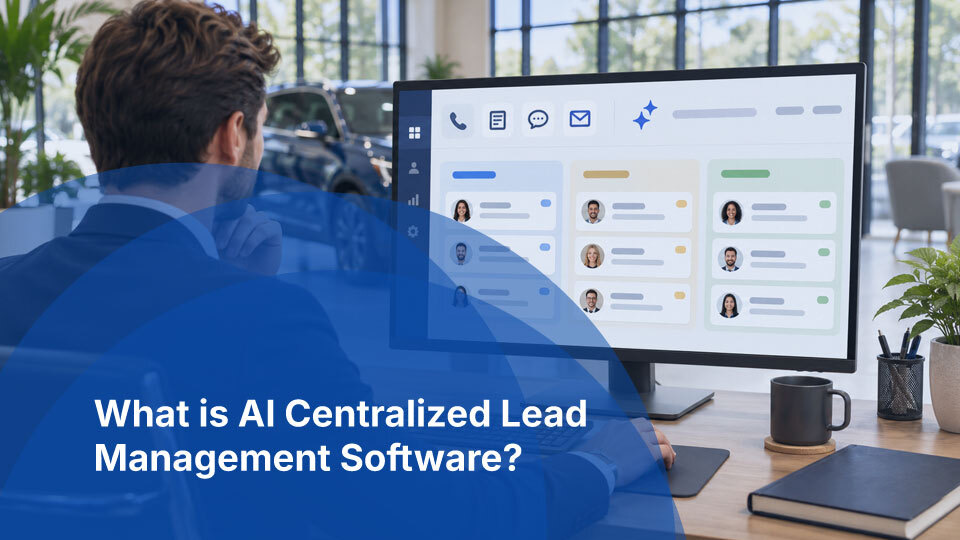
A centralized lead management system is software that collects, organizes, tracks, and helps manage customer inquiries from multiple channels through one platform. It provides a shared place to view prospective buyers, review their interactions, assign responsibility, and manage follow-ups.
Instead of checking separate inboxes, spreadsheets, phone logs, and messaging tools, dealership teams can use a unified dashboard to understand where leads came from and what needs to happen next.
Depending on its integrations and configuration, a system may bring together inquiries from:
-
- Website forms and web chats
- Phone calls
- Text messages
- Social media direct messages
- Third-party lead sources
- Sales and service inquiry channels
A centralized system is more than a dashboard. Its value comes from connecting lead capture with the processes that follow: qualification, assignment, communication, appointment scheduling, and performance tracking.
What OmnePulse Does as an AI Centralized Automotive Lead Management System
OmnePulse is designed to bring dealership conversations from multiple channels, including phone calls, text messages, social media direct messages, and web chats into a single, unified workflow.
Its AI capabilities can use dealership information, including inventory and vehicle detail pages (VDPs), to help respond to customer questions.
What it does for a dealership:
-
- Provides one place for every customer conversation.
- Captures leads in 60 seconds and routes them if required.
- Keep following up on cold leads until it’s a yes or no.
- Notifies the dealership BDC about every lead.
- Books customers’ appointments automatically.
- Shows statistics and reports about leads.
The exact channels, integrations, response times, and automation available can depend on the dealership’s existing setup. They should confirm the capabilities they need during a product demonstration to improve their workflows.
How Does a Centralized Lead Management System Work?
A centralized lead management system connects the steps between a customer’s first inquiry and the dealership’s next action.
A typical workflow looks like this:
1. Capture Leads From Multiple Channels
A potential customer may contact a dealership through a website form, phone call, text message, web chat, or social media. The system collects inquiries from supported sources and brings them into a shared unified workspace.
Such an approach reduces the need for human intervention to check every channel separately and store leads in a separate spreadsheet. OmnePulse keeps every lead tracked and transcribed in the dashboard for advisors’ context.
2. Consolidate Lead Information
Once an inquiry is captured, the system records the available customer details and conversation history. When connected to the dealership’s CRM, it can help keep relevant lead information accessible to the staff members who need it.
A unified record gives the team more context than an isolated message or missed-call notification.
3. Qualify and Assign the Lead
The next step is to understand what the customer needs. For example, a lead may be asking about a particular vehicle, availability, financing, a test drive, or a service appointment.
Lead qualification helps the dealership identify the inquiry type and determine the appropriate next step. The lead can be routed to the relevant sales, service, or BDC staff member if they ask for a specific detail that it can’t provide them with.
4. Respond and Follow Up
The system helps teams see which inquiries need a response and which prospects require another touchpoint. AI-powered centralized system, OmnePulse, responds to leads and initiates follow-ups based on the conversation and configured rules.
Automated communication remains relevant to the customer’s inquiry, and staff can step in when a question needs personal attention or a decision that the system cannot make.
5. Schedule Appointments
When a lead is qualified and ready for the next step, OmnePulse supports appointment scheduling. For a dealership, this could mean arranging a test drive, sales consultation, or service visit.
Appointment availability and booking rules should be connected to the dealership’s actual calendar and operating process.
6. Track Activity and Measure Performance
Finally, the system keeps lead activity and communication history available for review. Managers can use reporting to understand lead volume, response activity, follow-up status, appointment activity, and team workload.
This visibility helps dealerships identify where leads are being delayed or lost and where their processes may need improvement.
How Does a Centralized Lead Management System Work for Automotive?
Centralizing lead activity can help dealerships improve visibility and coordination across sales, service, and BDC teams. The benefits depend on how consistently the system is configured and used within a dealership.
1. Zero Lead Leakage
Dealerships receive inquiries throughout the day, including times when the BDC team is busy assisting customers or when the showroom is closed. If an inquiry remains in a voicemail or is not recorded properly, the dealership may miss the opportunity to respond.
A centralized system gives the team one place to review incoming inquiries and their status. OmnePulse is designed to capture conversations from its supported channels and keep them accessible in a unified workflow. Its AI response and notification capabilities can help the dealership act on inquiries promptly.
2. Instant & Automated Follow-Ups
A prospect may not be ready to purchase during the first conversation. They might need more information, want to compare vehicles, or plan to visit later. Such prospects can be overlooked without a proper and clear follow-up strategy.
OmnePulse helps teams track follow-up activity and identify which prospects need another contact. It also describes automated, context-aware follow-ups based on a prospect’s vehicle interests and intent.
3. Full Customer Journey Visibility
When conversations are spread across phone logs, text messages, social media, and spreadsheets, employees may have an incomplete view of a lead’s history. That makes it harder to understand what the customer has already asked and what the dealership has promised to do.
A centralized record helps employees review available lead sources, messages, status changes, and follow-up activity. With this context, a team member can continue a conversation without asking the customer to repeat information unnecessarily.
4. Seamless Cross-Department Handoffs
A dealership may receive sales, parts, and service inquiries through the same communication channels. These requests often need different advisors or departments to provide leads with accurate information.
A centralized workflow can help route an inquiry to the appropriate team while keeping its available context attached. OmnePulse describes a shared information and task-routing approach intended to support coordination between dealership teams.
5. Higher Conversion Rates
Slow responses, inconsistent follow-ups, and missing customer context can make it harder for dealerships to move prospects toward an appointment or purchase.
Centralized lead management addresses these process gaps by making inquiries easier to track and helping teams respond more consistently. Human-like AI-assisted responses and follow-ups can be icing on the cake, while sales and BDC employees handle conversations that need personal attention.
OmnePulse can guarantee to maximize your conversion rates by 391% by responding to your leads and qualifying them. Dealerships can evaluate OmnePulse’s performance using their own baseline and reporting data in a demo.
6. Data-Driven Performance Reporting
A spreadsheet shows the leads a salesperson recorded, but it doesn’t provide a complete picture of missed calls, unanswered messages, or overdue follow-ups. A centralized system can give managers a clearer view of recorded inquiries and their activity.
OmnePulse’s reports:
-
- Lead volume by source
- Initial response time
- Unanswered or missed inquiries
- Follow-up status
- Appointment activity
- Lead assignment and workload
- Outcomes by team or location
These measures help managers identify bottlenecks and make informed adjustments to staffing, routing, and follow-up processes.
Centralized Lead Management System vs. Traditional Lead Management
Centralized lead management pulls all customer inquiries from multiple channels into a single, unified workspace. Traditional lead management relies on siloed systems, individual salespeople tracking their own prospects, or manual handoffs where leads are scattered across spreadsheets, separate emails, and isolated department desks.
Core Comparison of Centralized Lead Management and Traditional Lead Management in the Automotive Industry
| Features | Traditional Lead Management | Centralized Lead Management |
|---|---|---|
| Lead Capture | Manual entry or disconnected forms prone to human delay | Automated, instant, and omnichannel |
| Ownership & Accountability | Leads easily fall through the cracks or sit unowned | Every lead has a clear owner and visible audit trail |
| Distribution & Routing | Ad-hoc verbal handoffs, whiteboard lists, or cherry-picking | Automated rules assign and balance leads fairly across sales teams |
| Response Speed | Delayed follow-up dependent on shift schedules or manual checks | Instant automated responses and real-time alerts |
| Data & Visibility | Fragmented reporting across individual desks or legacy systems | Single source of truth with real-time analytics and leakage reports |
There is a comparison table of traditional lead management and a centralized lead management system where you can clearly see the centralized system winning. Dealerships can use the centralized system to capture every lead from multiple channels.
Why Choose OmnePulse for Centralized Automotive Lead Management
When a centralized system collects every lead into one CRM, OmnePulse takes the lead and responds 24/7 while qualifying them for a sales or service appointment.
OmnePulse isn’t just a centralized lead management system; it’s an autonomous, integrated system with advanced AI capabilities to qualify leads and follow up on prior leads until it’s a yes or no.
Advanced Capabilities of OmnePulse:
-
- Captures every lead from multiple channels, including social media DMs, web chats, phone calls, and text messages.
- Responds to every lead within 60 seconds in a human-like manner.
- Transcribes every conversation in the CRM for lead context.
- Collects leads in the lead CRM and bookings in the appointment calendar.
- Keeps following up with the lead until their intentions are clear.
- One CRM for every customer conversation.
That’s how OmnePulse serves the overarching outcome of the entire workflow so dealerships’ advisors can focus on the task that really needs them.
Frequently Asked Questions
Why do car dealerships need lead management software?
Car dealerships need a lead management system to capture, organize, and convert high volumes of prospective buyers in a single place before they move on to a competitor.
Can centralized lead management software collect leads from multiple sources?
Yes, centralized lead management systems are specifically designed to collect, consolidate, and track leads from multiple channels into a unified dashboard.
Can multiple dealership locations use one lead management system?
Yes, multiple dealership locations can and commonly do use a single lead management system or multi-location CRM to have a unified dashboard of every CRM.
How does automated lead distribution work in automotive dealerships?
Automated lead distribution in automotive dealerships is a software-driven approach that instantly routes customer inquiries to the right sales representative or Business Development Center (BDC) agent without manual intervention.
Can a centralized lead management system require technical knowledge?
No. OmnePulse is built for ease of use by sales reps and BDC managers. During onboarding, our technical team handles the CRM integration and initial setup so your staff can start managing leads right away.